Volcanoes, canyons and blue sunsets
Mars has the biggest volcano and the longest canyon in the solar system, ice at the poles, planet-wide dust storms and a sky that gets things backwards.
Not just red
It’s called the Red Planet because iron minerals in the Martian dirt oxidise, or rust. NASA Science: Mars facts The Red Planet is actually many colours. Up close the ground is brown, gold and tan. NASA Science: Mars facts
Olympus Mons
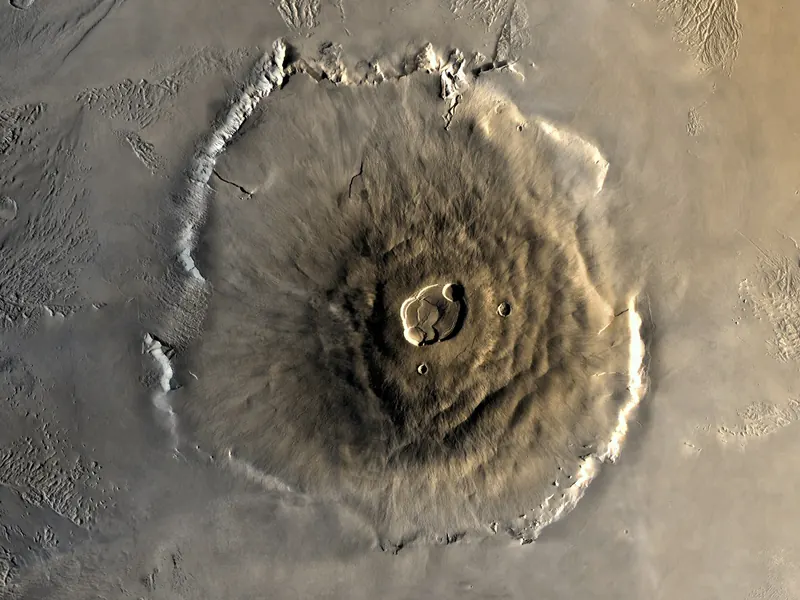
Mars has the largest volcano in the solar system, Olympus Mons. It is more than 40 km tall from base to summit. NASA Science: Mars facts That’s more than four times the height of Mount Everest, which rises 8,848 m. NASA Science: Mars facts
The base of Olympus Mons covers an area as large as the US state of Arizona. NASA Science: Mars facts
Valles Marineris
Valles Marineris, the largest canyon in the solar system, is about 3,870 km long, 600 km wide and 9.3 km deep. It would stretch from California to New York. NASA Science: Mars facts Valles Marineris is more than 10 times longer and wider than Earth’s Grand Canyon. NASA Science: Mars facts
Water, then and now
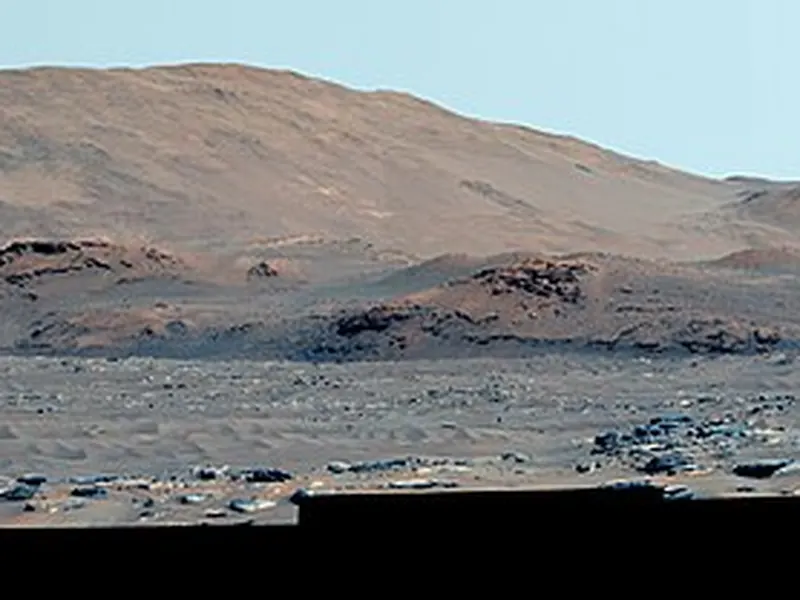
NASA missions have found lots of evidence that Mars was much wetter and warmer, with a thicker atmosphere, billions of years ago. NASA Science: Mars facts Mars has ancient river valleys, deltas and lakebeds, and rocks that could only have formed in liquid water. NASA Science: Mars facts
Some features suggest Mars had huge floods about 3.5 billion years ago. NASA Science: Mars facts There is water on Mars today, mostly as ice just under the surface near the poles. The air is too thin for liquid water to last long on the surface. NASA Science: Mars facts
There’s evidence of liquid salty water in the ground on some Martian hillsides. NASA Space Place: All about Mars
Is anything alive?
Scientists don’t expect to find anything living on Mars today. They are looking for signs of life from long ago, when Mars was warmer and wetter. NASA Science: Mars facts · checked 25 Oct 2026
In 2025 the journal Nature published results showing that a Perseverance sample from a rock nicknamed “Cheyava Falls” contains potential biosignatures: clues that need more study before anyone can say whether life was there. NASA Science: Perseverance rover · checked 25 Oct 2026
The sky
To our eyes the Martian sky would look hazy and red, because of dust floating in the air, not blue like Earth’s. NASA Science: Mars facts
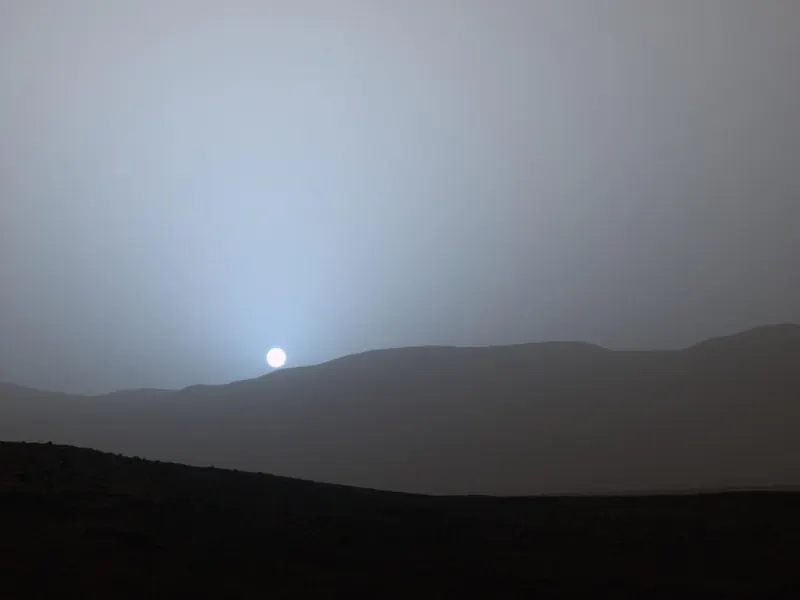
Sunsets on Mars glow blue. Fine dust lets blue light through more easily, so the blue stays close to the Sun. NASA Photojournal: Sunset in Mars’ Gale Crater Curiosity photographed its first colour sunset on sol 956 of its mission, 15 April 2015, in Gale Crater. NASA Photojournal: Sunset in Mars’ Gale Crater
Clouds
Clouds are rare on Mars. Most float no higher than about 60 km and are made of water ice, but some very high ones are probably dry ice. NASA JPL: Curiosity captures shining clouds
Weather
Temperatures on Mars can reach 20 °C or drop to about −153 °C. NASA Science: Mars facts The average temperature on Mars is about −59 °C. NASA NSSDC: Mars fact sheet
Stand on the equator at noon and it would feel like spring at your feet (24 °C) and winter at your head (0 °C). NASA Science: Mars facts
Winds on Mars sometimes whip up dust storms that cover much of the planet. Afterwards it can take months for the dust to settle. NASA Science: Mars facts
Next: the moons →